-

Indigenous America in the Spanish Language Classroom
Anne Fountain
Provides teachers with key historical and cultural information about Indigenous Peoples throughout the Americas and explains how to incorporate relevant resources. It begins with an overview of the Iberian impact on Indigenous Americans and connects it to language teaching with practical ideas. The book includes ideas for Beginning classes, courses in Conversation, Composition, Linguistics, and Translation and for Advanced Placement Literature and Culture. A separate chapter covers Spanish American Literature and the chapter on Latin American Studies has a focus on Brazil. A distinctive feature of the Ebook lets readers access hundreds of active sites with a single click.
-

Asghar Farhadi: Interviews
Ehsan Khoshbakht and Drew Todd
This volume sheds new light on the life and career of celebrated Iranian filmmaker Asghar Farhadi, whose roots in theatre and then television greatly inform his movies. Hailed by critics today as one of his generation's great dramatist filmmakers, Farhadi reveals much of his craft in a series of interviews given throughout his career up to the present. Translated from Persian into English exclusively for this publication, the interviews offer unique perspectives into the filmmaker's complicated role as artist and celebrity in the Islamic Republic of Iran.
-
![In-Between Worlds: Performing [as] Bauls in an Age of Extremism by Sukanya Chakrabarti](https://scholarworks.sjsu.edu/faculty_books/1343/thumbnail.jpg "In-Between Worlds: Performing [as] Bauls in an Age of Extremism by Sukanya Chakrabarti")
In-Between Worlds: Performing [as] Bauls in an Age of Extremism
Sukanya Chakrabarti
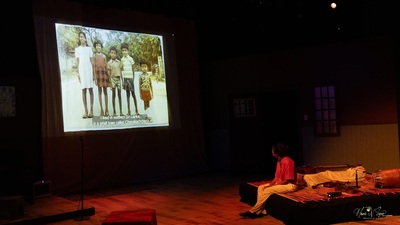
This book examines the performance of Bauls, ‘folk’ performers from Bengal, in the context of a rapidly globalizing Indian economy and against the backdrop of extreme nationalistic discourses. Recognizing their scope beyond the musical and cultural realm, Sukanya Chakrabarti engages in discussing the subversive and transformational potency of Bauls and their performances. In-Between Worlds argues that the Bauls through their musical, spiritual, and cultural performances offer ‘joy’ and ‘spirituality,’ thus making space for what Dr. Ambedkar in his famous 1942 speech had identified as ‘reclamation of human personality’. Chakrabarti destabilizes the category of ‘folk’ as a fixed classification or an origin point, and fractures homogeneous historical representations of the Baul as a ‘folk’ performer and a wandering mendicant exposing the complex heterogeneity that characterizes this group. Establishing ‘folk-ness’ as a performance category, and ‘folk festivals’ as sites of performing ‘folk-ness,’ contributing to a heritage industry that thrives on imagined and recreated nostalgia, Chakrabarti examines different sites that produce varied performative identities of Bauls, probing the limits of such categories while simultaneously advocating for polyvocality and multifocality.While this project has grounded itself firmly in performance studies, it has borrowed extensively from fields of postcolonial studies and subaltern histories, literature, ethnography and ethnomusicology, and cosmopolitan studies.
-

In the Shadow of Tungurahua: Disaster Politics in Highland Ecuador
A.J. Faas
In the Shadow of Tungurahua is about the people of Penipe, Ecuador living in and between several villages around the volcano Tungurahua and two resettlement communities built for people displaced following volcanic eruptions in 1999 and 2006. The book challenges prevailing ideas about how disasters are produced and reproduced. The disasters unfolding around Tungurahua also provide lessons in the humanitarian politics of disaster—deservingness, inequality, and bare life. But this is also a story of how people responded to confront hardships and craft new futures, about forms of cooperation in disaster, and the potential for locally derived disaster recovery.
-
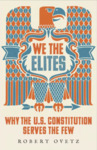
We the Elites: Why the US Constitution Serves the Few
Robert Ovetz
Written by 55 of the richest white men, and signed by only 39 of them, the US constitution is the sacred text of American nationalism. Popular perceptions of it are mired in idolatry, myth and misinformation - many Americans have opinions on the constitution but have little idea what it says. This book examines the constitution for what it is – a rulebook for elites to protect capitalism from democracy. Social movements have misplaced faith in the constitution as a tool for achieving justice when it actually impedes social change through the many roadblocks and obstructions we call 'checks and balances'. This stymies urgent progress on issues like labour rights, poverty, public health and climate change, propelling the American people and rest of the world towards destruction.Robert Ovetz's reading of the constitution shows that the system isn't broken. Far from it. It works as it was designed to.
-

Valley of Heart's Delight: Environment and Sense of Place in the Santa Clara Valley
Anne Marie Todd
This agricultural history explores the transformation of the Santa Clara Valley from America's largest fruit-producing region into the technology capital of the world. Extensive archival research and interviews reveal how a sense of place emerges and changes in this evolving agricultural community. A community's sense of place influences a sense of responsibility towards the local environment. Silicon Valley is a non-place, where weakened or disrupted attachment to place threatens the environment and community. The story of the Santa Clara Valley is an American story of the development of agricultural lands and the transformation of rural regions.
-
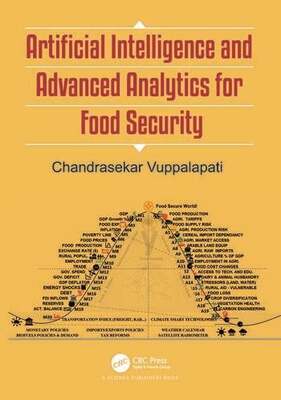
Artificial Intelligence and Heuristics for Enhanced Food Security
Chandrasekar Vuppalapati
"This book introduces readers to advanced data science techniques for signal mining in connection with agriculture. It shows how to apply heuristic modeling to improve farm-level efficiency, and how to use sensors and data intelligence to provide closed-loop feedback, while also providing recommendation techniques that yield actionable insights.
The book also proposes certain macroeconomic pricing models, which data-mine macroeconomic signals and the influence of global economic trends on small-farm sustainability to provide actionable insights to farmers, helping them avoid financial disasters due to recurrent economic crises.
The book is intended to equip current and future software engineering teams and operations research experts with the skills and tools they need in order to fully utilize advanced data science, artificial intelligence, heuristics, and economic models to develop software capabilities that help to achieve sustained food security for future generations." -
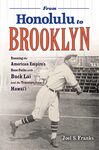
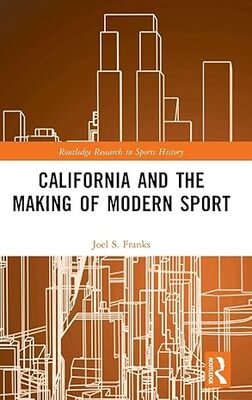
From Honolulu to Brooklyn: Running the American Empire’s Base Paths with Buck Lai and the Travelers from Hawai’i
Joel S. Franks
From 1912 to 1916, a group of baseball players from Hawaiʻ i barnstormed the U.S. mainland. While initially all Chinese, the Travelers became more multiethnic and multiracial with ballplayers possessing Chinese, Japanese, Hawaiian, and European ancestries. As a group and as individuals the Travelers' experiences represent a still much too marginalized facet of baseball and sport history. Arguably, they traveled more miles and played in more ball parks in the American empire than any other group of ballplayers of their time. Outside of the major leagues, they were likely the most famous nine of the 1910s, dominating their college opponents and more than holding their own against top-flight white and black independent teams. And once the Travelers’ journeys were done, a team leader and star Buck Lai gained fame in independent baseball on the East Coast of the U.S., while former teammates ran base paths and ran for political office as they confronted racism and colonialism in Hawaiʻ i.
-

The Conscious Communicator: The Fine Art of Not Saying Stupid Sh*t
Janet M. Stovall and Kim Clark
The Conscious Communicator, a #1 Amazon Best Selling title, helps organizations answer the why, what, when, and how to communicate diversity, equity and inclusion (DEI) and social justice subjects. The book introduces The DEPTH Model, a framework and practical tool to help companies craft DEI and social justice and communications aligned with their mission, vision, and values – consistently, proactively, and in ways that are powerful rather than performative.
-

California’s Recall Election of Gavin Newsom: COVID-19 and the Test of Leadership
Larry N. Gerston, Mary Currin-Percival, and Garrick L. Percival
Less than two years after California Governor Gavin Newsom’s overwhelming election victory, more than two million Californians signed on to a recall effort, hoping to expel him from office in a special election. This book explains that paradox and, in the process, enlightens readers about the recall process, the challenges of federalism, and the pitfalls of direct democracy. It examines the underlying conditions that expose a state with poorly linked institutions, a bitterly divided society, and a governor who had to act under nearly impossible conditions, demonstrating his strengths and vulnerabilities along the way.
-
Intelligent Communication Technologies and Virtual Mobile Networks: Proceedings of ICICV 2022
G. Rajakumar, Ke-Lin Du, Chandrasekar Vuppalapati, and Grigorios N. Beligiannis
The book is a collection of high-quality research papers presented at Intelligent Communication Technologies and Virtual Mobile Networks (ICICV), held at Francis Xavier Engineering College, Tirunelveli, Tamil Nadu, India, during February 10–11, 2022. The book shares knowledge and results in theory, methodology and applications of communication technology and mobile networks. The book covers innovative and cutting-edge work of researchers, developers and practitioners from academia and industry working in the area of computer networks, network protocols and wireless networks, data communication technologies and network security.
-
Smart IoT for Research and Industry
Melody Moh, Kanta Prasad Sharma, Rashmi Agrawal, and Vicente Garcia Diaz
This book covers a variety of smart IoT (Internet of Things) applications for industry and research. For industry, it is a guide for real-time automation of application domains, including real-time tracking and navigation for smart transport systems and GPS domains, modern electric grid control, IoT for modern society, modern medical science, and IoT automation for Industry 4.0. For research, the book underlines enabling technologies such as fog computing, wireless sensor networks, data mining, context awareness, real-time analytics, virtual reality, and cellular communications. The book pertains to researchers, outcome-based academic leaders, as well as industry leaders.
-
Intermediate Dynamics
Patrick Hamill
This advanced undergraduate physics textbook presents an accessible treatment of classical mechanics using plain language and clear examples. While comprehensive, the book can be tailored to a one-semester course. An early introduction of the Lagrangian and Hamiltonian formalisms gives students an opportunity to utilize these important techniques in the easily visualized context of classical mechanics. The inclusion of 321 simple in-chapter exercises, 82 worked examples, 550 more challenging end-of-chapter problems, and 65 computational projects reinforce students' understanding of key physical concepts and give instructors freedom to choose from a wide variety of assessment and support materials. This new edition has been reorganized. Numerous sections were rewritten. New problems, a chapter on fluid dynamics, and brief optional studies of advanced topics such as general relativity and orbital mechanics have been incorporated. Online resources include a solutions manual for instructors, lecture slides, and a set of student-oriented video lectures.
-
Machine Learning for Societal Improvement, Modernization, and Progress
Vishnu S. Pendyala
Machine Learning for Societal Improvement, Modernization, and Progress showcases the path-breaking applications of machine learning that are leading to the next generation of computing and living standards. The focus of the book is machine learning and its application to specific domains, which is resulting in substantial civilizational progress. Covering topics such as lifespan prediction, smart transportation networks, and socio-economic data, this premier reference source is a dynamic resource for data scientists, industry leaders, practitioners, students and faculty of higher education, sociologists, researchers, and academicians.
-
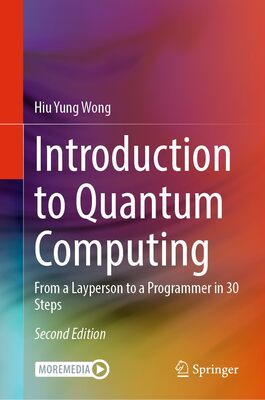
Introduction to Quantum Computing: From a Layperson to a Programmer in 30 Steps
Hiu Yung Wong
This textbook introduces quantum computing to readers who do not have much background in linear algebra and quantum mechanics. The author targets undergraduate and master students who are willing to spend about 60 -90 hours seriously learning quantum computing. Readers will be able to write their program to simulate quantum computing algorithms and run on real quantum computers on IBM-Q. Moreover, unlike books that only give superficial and “hand-waving” explanations, this book uses exact formalism so readers can continue to pursue more advanced topics based on what they learn from this book.
-
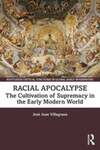
Racial Apocalypse: The Cultivation of Supremacy in the Early Modern World
José Juan Villagrana
This book reveals the relationship between apocalyptic thought, political supremacy, and racialization in the early modern world. The chapters in this book analyze apocalypse and racialization from several discursive and geopolitical spaces to shed light on the ubiquity and diversity of apocalyptic racial thought and its centrality to advancing political power objectives across linguistic and national borders in the early modern period.
-
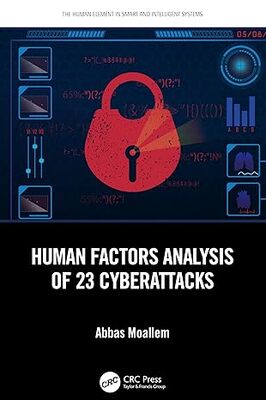
HCI for Cybersecurity, Privacy and Trust: 4th International Conference, HCI-CPT 2022, Held as Part of the 24th HCI International Conference, HCII 2022, Virtual Event, June 26 – July 1, 2022, Proceedings
Abbas Moallem
This book constitutes the refereed proceedings of the 4th International Conference on HCI for Cybersecurity, Privacy and Trust, HCI-CPT 2022, held as part of the 23rd International Conference, HCI International 2022, which was held virtually in June/July 2022. The total of 1271 papers and 275 posters included in the HCII 2022 proceedings was carefully reviewed and selected from 5487 submissions. The HCI-CPT 2022 proceedings focuses on to user privacy and data protection, trustworthiness and User Experience in cybersecurity, multi-faceted authentication methods and tools, HCI in cyber defense and protection, studies on usable security in Intelligent Environments, as well as the impact of the Covid-19 pandemic on cybersecurity
-

The Left-Armed Corps: Writings by Amputee Civil War Veterans
Allison M. Johnson
The Left-Armed Corps collects and annotates a unique and little-known body of Civil War literature: narrative sketches, accounts, and poetry by veterans who lost the use of their right arms due to wounds sustained during the conflict and who later competed in left-handed penmanship contests in 1865 and 1866.
-
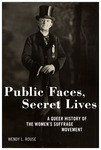
Public Faces, Secret Lives: A Queer History of the Women's Suffrage Movement
Wendy L. Rouse
The women’s suffrage movement, much like many other civil rights movements, has an important and often unrecognized queer history. In Public Faces, Secret Lives Wendy L. Rouse reveals that, contrary to popular belief, the suffrage movement included a variety of individuals who represented a range of genders and sexualities. However, owing to the constant pressure to present a “respectable” public image, suffrage leaders publicly conformed to gendered views of ideal womanhood in order to make women’s suffrage more palatable to the public. Rouse argues that queer suffragists did take meaningful action to assert their identities and legacies by challenging traditional concepts of domesticity, family, space, and death in both subtly subversive and radically transformative ways. Queer suffragists also built lasting alliances and developed innovative strategies in order to protect their most intimate relationships, ones that were ultimately crucial to the success of the suffrage movement. Public Faces, Secret Lives is the first work to truly recenter queer figures in the women’s suffrage movement, highlighting their immense contributions as well as their numerous sacrifices.
-
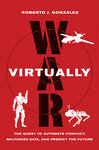
War Virtually: The Quest to Automate Conflict, Militarize Data, and Predict the Future
Roberto J. González
War Virtually is the story of how scientists, programmers, and engineers are developing data-driven technologies for fighting virtual wars. It gives a lucid, gripping account of what lies behind the autonomous weapons, robotic systems, predictive modeling software, surveillance programs, and psyops techniques that are transforming military conflict. The book also lays bare the processes by which the Pentagon and US intelligence agencies have joined forces with Silicon Valley, raising an alarming prospect: that someday, Big Tech might merge with Big Defense. "War Virtually" takes an unflinching look at a future where new military technologies threaten democratic governance and human survival.
-
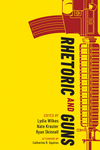
Rhetoric and Guns
Lydia Wilkes, Nate Kreuter, and Ryan Skinnell
Rhetoric and Guns collects 14 chapters from scholars in rhetoric, communication, education, and related fields to elucidate the relationship of rhetoric and guns. Guns and gun violence occupy a unique rhetorical space in the United States, one characterized by silent majorities, vocal minorities, and a political stalemate that fails to stem the tide of the dead. Guns are ever present in the US, they exercise powerful functions, but they are commonly talked about in oblique, unsystematic ways. The authors in this book hope to advance more direct, systematic engagement with rhetoric about guns, guns in rhetoric, and guns as rhetoric.
-
《中國哲學研究的方法論反思:比較哲學與哲學分析》(Reflections on Methodology in Studies of Chinese Philosophy: Comparative Philosophy and Philosophical Analysis)
Bo Mou
This edited anthology is a sister volume with Bo Mou’s recent monograph book Cross-Tradition Engagement in Philosophy: A Constructive-Engagement Account (New York and London: Routledge, 2020 /2022 paperback). The theme of this volume is to give a further theoretic exploration of the complementary relation between two major general methodologies in doing philosophy in view of contemporary studies of Chinese philosophy, i.e., comparative-philosophy methodology (as a general way of doing philosophy through cross-tradition engagement toward world philosophy, of which foregoing monograph book gives a systematic exploration) and analytic methodology (one representative methodology in contemporary studies of philosophy). This edited volume thus has its general methodological significance in doing philosophy (not only to studies of Chinese philosophy) and further enhance the theoretic and methodological points made in the monograph book on this front of research.
-
Redefining Journalism in an Age of Technological Advancements, Changing Demographics, and Social Issues
Phylis Johnson and Ian Punnett
This book (edited collection) explores imagined futures from literary geniuses and predictions from scholars and prophets grounded by forthcoming technological realities. It covers a range of topics that will likely transform the field of journalism as we know it over the next 50 to 100 years and beyond. Among them include the continued rise of fake news, increased reliance on artificial intelligence and robotics in journalism, the influence of emerging technologies such as augmented/virtual reality, drones, flying cars, a wired society and freedom restrictions, as well as how we will communicate to each other from beyond Earth throughout the galaxy.
-
Information Services Today: An Introduction
Sandra Hirsh
This third edition of Information Services Today: An Introduction demonstrates the ever-changing landscape of information services today and the need to re-evaluate curriculum, competency training, professional development, and lifelong learning in order to stay abreast of current trends and issues, and more significantly, remain competent to address the changing user needs of information communities. The new edition features chapter updates to address changes in information services, introducing new/updated topics such as emergency/crisis management/community resilience, sustainability, data analysis and visualization, social justice, and equity of access, diversity, and inclusion (EDI).
-
Intelligent Data Communication Technologies and Internet of Things: Proceedings of ICICI 2021
D. Jude Hemanth, Danilo Pelusi, and Chandrasekar Vuppalapati
This book gathers selected papers presented at the 5th International Conference on Intelligent Data Communication Technologies and Internet of Things (ICICI 2021), organized by JCT College of Engineering and Technology, Coimbatore, Tamil Nadu, India during 27 – 28 August 2021. This book solicits the innovative research ideas and solutions for almost all the intelligent data intensive theories and application domains. The general scope of this book covers the design, architecture, modeling, software, infrastructure and applications of intelligent communication architectures and systems for big data or data-intensive applications. In particular, this book reports the novel and recent research works on big data, mobile and wireless networks, artificial intelligence, machine learning, social network mining, intelligent computing technologies, image analysis, robotics and autonomous systems, data security and privacy.
Printing is not supported at the primary Gallery Thumbnail page. Please first navigate to a specific Image before printing.