-
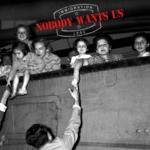
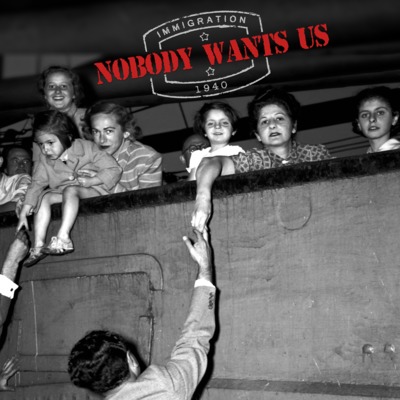
Nobody Wants Us
Stephen Morewitz
The documentary film, Nobody Wants Us, examines the impact of the Steamship Quanza controversy in September 1940 on U.S. immigration policy. Based on oral history interviews with Steamship Quanza survivors, analysis of archival documents from ship records, U.S Federal Court in Norfolk, Virginia, U.S. National Archives, U.S. State Department, and U,S. Department of Immigration and Naturalization, Nobody Wants Us shows how the U.S. State Department closed the visa program for political refugees and others fleeing Nazi Europe as a direct result of Steamship Quanza controversy
-
Supporting Today’s Students in the Library: Strategies for Retaining and Graduating International, Transfer, First-Generation and Re-Entry Students
Ngoc-Yen Tran and Silke Higgins
Supporting Today’s Students in the Library: Strategies for Retaining and Graduating International, Transfer, First-Generation, and Re-Entry Students centers on how academic libraries are addressing the unique struggles of international students, transfer or commuter students, first-generation students, and re-entry or older-adult students. The book, purposefully chosen as an edited volume to represent a large variety of voices, focuses on strategies for retaining and graduating these student populations by exploring methods for overcoming barriers, discussing best practices for engaging students in research and information literacy topics, as well as providing a variety of services that support students beyond the classroom environment.
-

Friction Stir Welding and Processing X
David Yan, Yuri Havanski, Rajiv S. Mishra, and Yukada Sato
This book is a compilation of the recent progress on friction stir technologies, including high-temperature applications, industrial applications, dissimilar alloy/materials, lightweight alloys, simulation, control, characterization, and derivative technologies. The volume offers a current look at friction stir welding technology from application to characterization and from modeling to R&D. Contributions document advances in application, controls, and simulation of the friction stir process to aid researchers in seeing the current state-of-the-art.
-
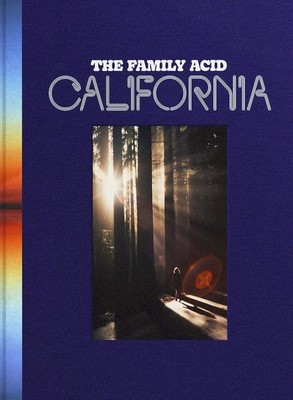
The Family Acid: California
Kate Steffens and Devon Steffens
The Family Acid: California showcases 50 years of California photography by Roger Steffens. Steffens began photographing while serving in the Vietnam War, and amassed an archive of hundreds of thousands of images. These slides and negatives sat in a closet until 2013, when his daughter and son, Kate and Devon, began scanning them and posting their finds to Instagram. Their Instagram account, The Family Acid, became a runaway success. The images they unearthed and included in the book cover a wealth of historic events and people, from Joan Baez leading anti-war protests at UC Berkeley to Bob Marley hanging out backstage.
-

Clinical and Psychological Perspectives on Foul Play
Stephen Morewitz
Clinical and Psychological Perspectives on Foul Play examines a wide range of factors that can influence how police determine foul play in possible homicide cases and in other possible crimes. It develops a new theory of uncertainty at micro, meso, and macro levels to explain how law professionals arrive at this decision. Specifically, it examines the extent to which uncertainty in these situations can be influenced by media coverage, family and community pressures, socioeconomic factors, demographic elements of victims, as well as police knowledge and resources. The latest research from the Foul Play Project and the Missing Persons Project are employed to support the recommendations in this book and to point the way toward further research in this area.
-
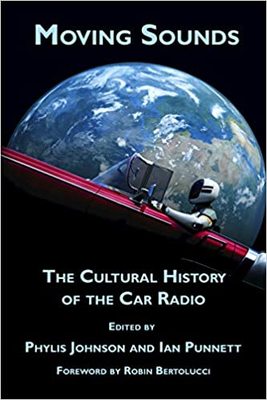
Moving Sounds: A Cultural History of Car Radio
Phylis West Johnson and Ian Punnett
Moving Sounds explores the unique animating symbiosis that develops whenever previously unrelated technologies become intertwined and form a mutually invigorating relationship. When "car" and "radio" became permanently inculcated, it changed how both cars and radio were designed and experienced. Moving Sounds is the first book-length study exploring the relationship between the car and the radio.
-
Blockchain (Library Futures Series, Book 3)
Sandra Hirsh and Susan W. Alman
This book in the Library Futures Series examines blockchain technology, a concept with far-reaching implications for the future of record-keeping. Blockchain uses a distributed database (multiple devices not connected to a common processor) that organizes data into records (blocks) that have cryptographic validation. In this book, Hirsh and Alman build on their ongoing research to examine the use of blockchain and its possible consequences for academic, public, school, and special libraries, as well as the information professionals who sustain those institutions.
Printing is not supported at the primary Gallery Thumbnail page. Please first navigate to a specific Image before printing.